International Conference

IMASEE-2026

1 & 2 May 2026

Innovative Multidisciplinary Approaches to Global Challenges Sustainability, Equity, and Ethics in a Rapidly Transforming World

About VGU

Vivekananda Global University (VGU), Jaipur is a premier multidisciplinary private university ranked A+ by NAAC in its first cycle and recognized among leading institutions in Asia, securing Rank 666 in QS Asia University Rankings 2025. With over 12,000 students from across India and 16 countries, the university offers more than 50 programs across 14 disciplines, including Agriculture, Engineering, Management, Law, Design, Applied Sciences, Hospitality, Pharmacy, and Humanities, along with robust Online and ODL programs.

VGU is distinguished for its strong innovation and research ecosystem, reflected in its 4.5- star rating by the Ministry of Education’s IIC, the establishment of Rajasthan’s first Atal Community Innovation Centre (ACIC) by NITI Aayog, and MSME-supported Technology Business Incubator under the ASPIRE scheme. The university also hosts the SIDBI Swavalamban Chair for MSME Solutions and has been awarded “University of the Year – West” by ASSOCHAM. With three incubation centres supporting over 40 start-ups, and collaborations with national bodies such as KVIC, Jal Jeevan Mission, BEE, and CSIRNEERI, VGU continues to strengthen its role as a hub of innovation, entrepreneurship, and societal impact. Guided by the vision of Swami Vivekananda, the university remains committed to academic excellence, global engagement, and holistic nation-building.
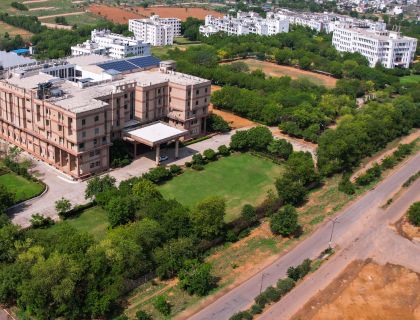

About VGU
Conference

About Conference

IMASEE–2026: Innovative Multidisciplinary Approaches to Global Challenges is an international academic conference organized by the Faculty of Humanities and Social Sciences, Vivekananda Global University, Jaipur, scheduled to be held on 1st and 2nd May 2026.

The conference aims to provide an interdisciplinary platform for scholars, researchers, academicians, and practitioners to engage in critical dialogue on pressing global challenges such as sustainability, equity, ethics, governance, technological transformation, public health, social justice, and cultural change. Recognizing the increasingly interconnected nature of contemporary issues, IMASEE–2026 emphasizes the role of Humanities and Social Sciences in shaping human-centred, ethical, and sustainable responses to global transformations.

IMASEE–2026 encourages multidisciplinary perspectives that integrate insights from development studies, political science, economics, sociology, international relations, public policy, education, gender studies, and cultural studies. The conference seeks to bridge theoretical inquiry with policy relevance and societal impact, fostering research that addresses both global and regional concerns.

Aligned with the objectives of NEP 2020, UGC research quality frameworks, NAAC accreditation criteria, and the United Nations Sustainable Development Goals (SDGs), the conference promotes academic excellence, ethical research practices, and socially responsible scholarship. Through plenary discussions, parallel technical sessions, and interactive workshops, IMASEE–2026 aims to facilitate knowledge exchange, interdisciplinary collaboration, and innovation-driven solutions to contemporary global challenges.

By bringing together diverse academic voices, IMASEE–2026 aspires to strengthen research networks, contribute to high-quality scholarly publications including Scopusindexed journals, and reinforce the role of higher education institutions in advancing sustainable, inclusive, and ethically grounded development pathways. About the Conference

CONCEPT NOTE


The contemporary world is undergoing rapid and complex transformations driven by climate change, technological disruption, demographic shifts, global inequalities, public health crises, and ethical dilemmas arising from innovation. Addressing these interconnected challenges requires multidisciplinary perspectives that integrate social, economic, political, cultural, and ethical dimensions.

The International Conference on Innovative Multidisciplinary Approaches to Global Challenges (IMASEE–2026) aims to provide an intellectual platform for scholars, researchers, practitioners, and policymakers to critically examine global issues through the lens of Humanities and Social Sciences. The conference emphasizes the role of humancentered knowledge in shaping sustainable, equitable, and ethically grounded responses to global transformations.

Building upon the academic foundation of previous IMASEE editions, the 2026 conference advances dialogue on how social sciences, development studies, political science, economics, sociology, education, public policy, gender studies, international relations, and cultural studies can collaboratively address global challenges. The conference foregrounds sustainability, equity, ethics, and human well-being as central pillars of multidisciplinary inquiry.

IMASEE–2026 seeks to foster cross-disciplinary engagement, promote innovative research, and encourage policy-relevant discussions that bridge theory and practice in a global context.

Objectives


  • To examine contemporary global challenges through multidisciplinary perspectives in Humanities and Social Sciences.
  • To analyze sustainability, equity, and ethics as interconnected dimensions of development and governance.
  • To promote critical dialogue on technology, environment, health, and society.
  • courage policy-oriented and practice-based research addressing global and regional concerns.
  • To provide a platform for scholars and researchers to share innovative and interdisciplinary research.
  • To strengthen academic collaboration across disciplines and institutions.

EXPECTED OUTCOMES


  • Enhanced multidisciplinary understanding of global challenges.
  • Scholarly exchange leading to innovative research collaborations.
  • Policy-relevant insights on sustainability, equity, and ethics.
  • Publication of selected papers in edited volumes or Scopus Indexed journals.
  • Strengthened academic networks at national and international levels.

Important Dates


Event Date
Abstract Submission Deadline 15 February 2026
Abstract Acceptance Notification 28 February 2026
Full Paper Submission 15 March 2026
Early Bird Registration 31 March 2026
Regular Registration 20 April 2026
Late/On Spot Registration 1-2 May

Registration Fees


Category Early Bird (Till 31 March 2026) Regular (Till 20 April 2026) Late/On Spot Registration*
Students (UG/PG) INR 500 INR 800 INR 1000
Research Scholars INR 1000 INR 1200 INR 1500
Academicians / Faculty Members INR 2000 INR 2500 INR 3000
Industry Professionals / Practitioners INR 2500 INR 3000 INR 3500
International Participants USD 100 USD 120 USD 140
Note:

Call for papers


IMASEE–2026 invites original and unpublished research papers from faculty members, research scholars, and practitioners in Humanities and Social Sciences. Submissions should reflect multidisciplinary approaches to global challenges aligned with the conference themes.

Publication Opportunity


Selected high-quality papers presented at IMASEE–2026 will be considered for publication in:

  • Scopus-indexed journals
  • Web of Science indexed journals
  • Peer-reviewed international and national journals
  • Edited volumes with ISBN

All submissions will undergo a rigorous double-blind peer-review process to ensure academic quality, originality, relevance, and methodological rigor . Publica tion will be subject to the guidelines, scope, and editorial policies of the respective journals. Authors whose papers are selected fo r Scopus-indexed journals will be required to revise their manuscripts as per reviewer comments and journal standards. Publication charges (if any) shall be borne by the authors, strictly as per the policies of the publishing journal.

The conference maintains zero tolerance for plagiarism, and all papers must be accompanied by a plagiarism report (below 10%) & AI plag must be Zero.

Day 1

  • Inaugural Session
  • Plenary Panel Discussion
  • Parallel Technical Sessions

Day 2

  • Plenary Panel Discussion
  • Parallel Technical Sessions
  • Valedictory Session

Day 1 – Plenary Panel Discussion

Theme: “Multidisciplin ary Responses to Global Crises: Sustainability, Equity, and Ethics"

Focus Areas:

  • In tersections of environment, technology, and society
  • Ethical challenges in global development
  • Role of Humanities and Social Sciences in crisis response

Day 2 – Plenary Panel Discussion

Theme: “Interdisciplin ary Research and Policy Innovation for Global Challenges”

Objectives:

  • Strength ening multidisciplinary research design
  • Linking academic research with policy formulation
  • Ethical considerations in global research
Theme 1: Sustainable Development and Climate Change
  • Climate change adaptation and mitigation strategies
  • Sustainable urban and rural development
  • Environmental governance and public policy
  • Water security, food systems, and climate resilience
Theme 2: Technology, Ethics, and Society
  • Artificial Intelligence, ethics, and governance
  • Digital transformation and social equity
  • Surveillance, data privacy, and human rights
  • Technology and future of work
Theme 3: Equity, Inclusion, and Social Justice
  • Gender, migration, and economic empowerment
  • Inequality, poverty, and social protection
  • Education, digital divide, and access
  • Marginalized communities and inclusive policies
Theme 4: Public Health, Demography, and Social Welfare
  • Public health systems and pandemic preparedness
  • Aging populations: social and economic challenges
  • Mental health and social well-being
  • Health equity and global health governance
Theme 5: Governance, Law, and Global Cooperation
  • Global governance and international institutions
  • Human rights and international law
  • Conflict, peacebuilding, and diplomacy
  • International trade, sustainability, and ethics
Theme 6: Culture, Heritage, and Social Transformation
  • Cultural heritage and digital transformation
  • Media, communication, and social change
  • Identity, globalization, and cultural politics
  • Ethics, values, and social narratives

IMASEE-2026

Organized By:

Department of Development Studies & Faculty of Management

Chief Patron :- Dr. K. Ram (Retd. IPS)

Chief Guest :- Prof. Sheila Rai (Council Member, ICSSR; General Secretary, RSVP)

Patron

  • Dr. Lalit K. Panwar (Retd. IAS)
    Chairperson, VGU
  • Dr. K. R. Bagaria (Ex-RPSC Member)
    Vice-Chairperson, VGU
  • Mr. M.R. Bagaria,
    Patron, VGU
  • Er. Onkar Bagaria
    CEO, VGU
  • Prof. N.D. Mathur
    President, VGU
  • Prof. DVS Bhagavanulu
    Pro-President, VGU (Research Affair)
  • Prof. Praveen Choudhary
    Registrar, VGU
  • Ms. Malvika Dudi Bagaria
    Director, Faculty of Management , VGU

CONVENOR

  • Prof.Deepali Singh
    Associate Dean, R&D Cell
  • Dr. Boola Choudhary
    Associate Professor, Faculty of Management
  • Dr. Harshita Sharma
    Assistant Professor, Department of Development Studies

ORGANIZING SECRETARIES

  • Dr. Garima Chauhan
  • Dr. Lehar Israni
  • Ms. Bhoomika Badlani
  • Dr. Punit Yadav

ORGANIZING TEAM

  • Ms. Yamini Kaushik
  • Ms. Aishwarya Sharma
  • Dr. Anushree Gaur
  • Dr. Chinmay Kulshrestha
  • Ms. Archana Sahay Saini
  • Ms. Priyanshi Mathur
  • Ms. Chandni Phophalia
  • Ms. Pooja
  • Ms. Bhanupriya Tiwari
  • Ms. Ayushi Nagar
  • Mr. Koushik Choudhary

International Advisory Board

  • Dr. Babayo Sule
    Associate Professor, Federal University of Kashere Gombe
  • Dr. Kabiru Gambo
    Associate Professor, Federal University Dutse
  • Dr. Bashir Saad Ibrahim
    Associate Professor, Federal University Dutse
  • Dr. Musa Garba Usman
    Associate Professor, Bayero University Kano
  • Dr. Lamidi Kamal Olaniyi
    Associate Professor, Federal University Dutse
  • Dr. Usman Bappi
    Associate Professor, Gombe State University
  • Dr. Adejumo Abdulhakeem
    Professor, Federal University Dutse, Jigawa
  • Dr. Yusuf Abdullah Manu
    Associate Professor, Federal University Dutse, Jigawa
  • Dr. Abubakar Yahaya
    Associate Professor, Federal University Dutse
  • Dr. Mark Asu-Obi
    Senior program manager, Department of Good Governance Unit
  • Muhammad Adamu YUSUF
    Post Doctoral Fellow (PDF), Department of Peace and Conflict, Modibbo Adama University, Yola
  • Dr. Shashi Kant Chaudhary (PhD, MA, PGCLTHE, SFHEA)
    Senior Lecturer, and Programme Lead MBA, Economics and Finance, British University Vietnam
  • Dr. Manju Rajan Babu
    Assistant Professor, Bahrain Polytechnic, Kingdom of Bahrain
  • Moon Moon Haque
    Professor, College of Healthcare Management & Economics, Gulf Medical University Ajman, United Arab Emirates
  • Prof. Khalid Hussainey
    Professor, Department of Accounting, Bangor University, Bangor, Gwynedd, Wales
  • Prof. Himmet Karadal
    Professor, Department of Communication, Bolu Abant Izzet Baysal University, Gölköy – Bolu / Türkiye
  • Prof. M. Saeed
    Professor, Department of Business Administration, College of Business, Minot State University, Minot, North Dakota 58707, USA
  • Dr. Mohammad Taqi
    Assistant Professor, Department of School of Business, Bahrain Polytechnic, Kingdom of Bahrain
  • Abubakar Yahaya
    Professor, Political Science, Makerere University Kampala Uganda, Uganda

Organizing Committee

  • Ms. Yamini Kaushik
    Assistant Professor, Department of Development Studies
  • Ms. Bhoomika Badlani
    Assistant Professor, Department of Development Studies
  • Ms. Sridisha Banerjee
    Assistant Professor, Faculty of Management
  • Ms. Shreya Mathur
    Assistant Professor, Faculty of Management
  • Ms. Deeksha Sharma
    Assistant Professor, Department of Development Studies
  • Ms. Snehal Kapoor
    Assistant Professor, Faculty of Management
  • Ms. Simnu Bhatia
    Assistant Professor, Faculty of Management
  • Mr. Anmol Mehta
    Assistant Professor, Faculty of Management
  • Ms. Sumedha Bhatnagar
    Assistant Professor, Department of Development Studies
  • Ms. Tavishi Limaye
    Assistant Professor, Department of Development Studies

National Advisory Board

  • Prof. Nisha Pandey
    Advisor, Vivekananda Global University,Jaipur
  • Prof. Raka Singh
    Professor(Retd.), University of Rajasthan, Jaipur
  • Prof. Nafees A Ansari
    Director, Distance Education, A M U Aligarh
  • Prof. Meeta Mathur
    Department of Economics, University of Rajasthan
  • Prof. Farhana Kausar
    Professor, Department of Political Science Aligarh Muslim University, Aligarh
  • Prof. Mohammad Arif
    Professor, Department of Political Science Mahatma Gandhi Kashi Vidyapith, Varanasi
  • Dr. Mohammad Naseem Khan
    Associate Professor, Department of Political Science Aligarh Muslim University, Aligarh
  • Dr Shantesh Kumar Singh
    Associate Professor, Department of Political Science, Central University of Haryana
  • Prof. (Dr.) Anupama Pandey
    Professor & Head of Institution, NIMS School of Business, NIMS University Rajasthan, Jaipur
  • Dr Bikashdev Chhura
    Associate professor & Head Department of political science and Public Administration, School of humanities and social sciences, Nims University Rajasthan. Jaipur